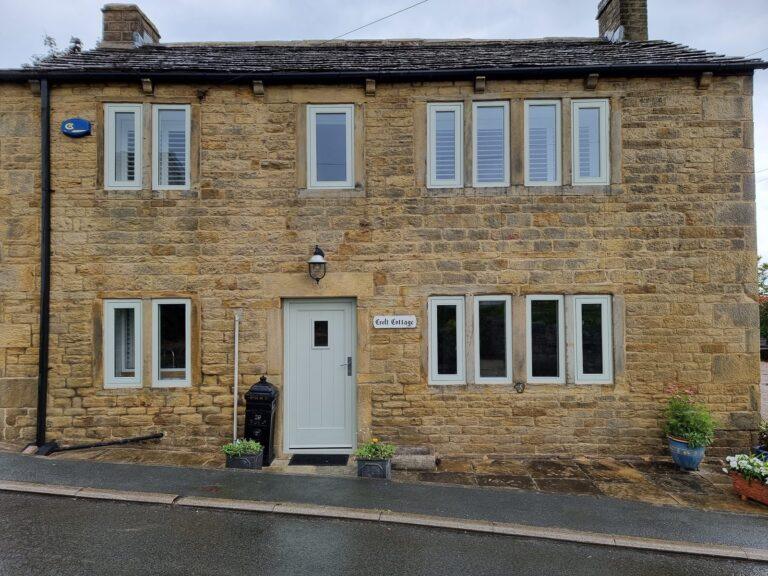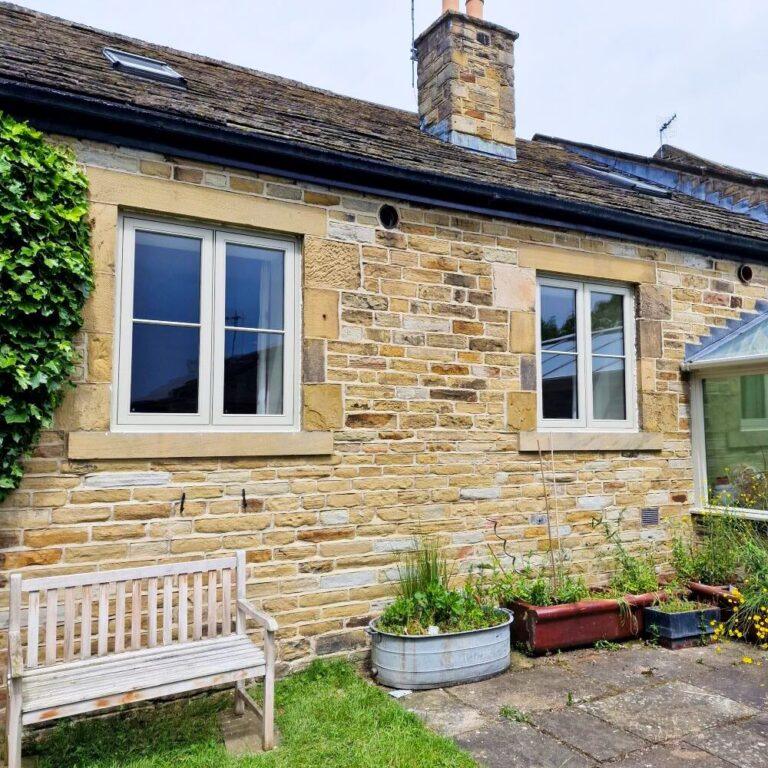

Timber bi-fold doors work well in period and traditional homes. They match existing joinery, age sympathetically, and open up to the garden. For most period and traditional homes, the material and scale of the investment are well matched.
Why choose timber bi-fold doors over aluminium or uPVC?
Timber frame sections can be profiled and moulded to match period detailing, and timber bi-fold doors sit flush with the existing fabric of an older building in a way that aluminium profiles rarely do. The surface takes paint or stain in exactly the same way as the rest of the joinery on the house.
We manufacture our bi-fold doors in Accoya timber. Accoya is a modified timber chosen for its resistance to rot, swelling and shrinkage. It carries a 50-year guarantee against rot and decay. That matters for a large moving door set, where a frame that swells and sticks in wet weather becomes a recurring problem.
If you are also considering new windows alongside bi-fold doors, our wooden flush casement windows and wooden sliding sash windows can be specified to the same profile and finish, so the joinery reads as one consistent set across the building.
How do timber bi-fold doors perform in the British climate?
Accoya resists the seasonal movement that causes traditional softwood bi-folds to bind or gap. This helps keep the panels tracking smoothly and the seals working consistently over time.
Glazing specification has as much effect on thermal performance as the frame material. We can specify double or triple-glazed sealed units to suit the project requirements, and the overall U-value of the finished door set depends on the glazing package chosen. A well-specified timber bi-fold door can be designed to meet the thermal performance requirements for new extensions, and we can advise on the glazing units required.
Draught seals, thresholds and hardware affect daily performance. We use quality ironmongery throughout and the doors are finished under workshop conditions before delivery, so the seal between frame and leaf is set properly before installation.
What sizes and configurations are available?
Because the doors are made to measure, the opening width and height are not constrained by standard sizes. Most domestic bi-fold sets run across a range of panel counts, from two panels upwards, though we have manufactured wider configurations. The folding direction, the split of panels to each side, and the position of any traffic door within the set are all specified at the survey stage.
Narrow sight lines are possible but depend on structural requirements. Timber frame sections carry the weight of the glazed panels, so there is a practical minimum thickness that keeps the door set rigid and square over time. Our team will advise on what is achievable for a given opening.
As a rough illustration only, panel counts tend to increase with span, but every project is configured individually. The right arrangement depends on the specific opening, the structural context and how the door will be used day to day.
Can timber bi-fold doors be used on listed buildings or in conservation areas?
Yes, and this is an area where timber has an advantage. Timber is often viewed more favourably by conservation officers because it is the original material and can be worked to replicate historic detailing.
We have worked on listed building and conservation area projects across West Yorkshire, supporting homeowners and architects through planning applications and conservation area proposals. We specify mouldings, glazing bar profiles and surface finishes to order on every project, and we can specify all of these to match existing joinery on the building. You can see examples of completed projects on our projects page.
If you are in a conservation area or working on a listed building and want to add bi-fold doors, we would recommend speaking with your local planning authority at an early stage, and we are happy to provide technical drawings and specifications to support an application.
What finish options are available, and how long do they last?
We finish the doors under workshop conditions before delivery, which gives better adhesion and coverage than site-applied paint. Options include microporous paint systems in a wide range of colours, and oil or stain finishes for those who prefer a more natural appearance.
Because Accoya has been properly prepared under workshop conditions, finishing bonds well and is less prone to cracking or peeling than site-applied paint on untreated softwood. Maintenance intervals vary with the orientation of the door, the colour chosen and local weather exposure. A north-facing installation in a sheltered position will typically require repainting or restaining less often than one facing south-west in an exposed upland location.
A dark colour on a south-facing door will absorb more heat and may require attention sooner. Our team can advise on suitable finishes for the specific conditions.
How does the cost of timber bi-fold doors compare to other materials?
Timber bi-fold doors at this specification typically represent a higher upfront investment than aluminium bi-folds. That reflects the material cost of Accoya and the workshop finishing process. The 50-year rot guarantee gives confidence in long-term durability. Aluminium bi-folds may cost less upfront and have different maintenance requirements, but aluminium profiles offer less scope for period detailing, and they rarely sit as naturally alongside period joinery.
We can give a fixed price once we have the survey measurements and the specification confirmed. There is no meaningful way to quote accurately without knowing the exact opening, configuration, glazing package and finish. To understand the full range of what we make, see our services page.
If you would like to discuss a project, get in touch via our contact page or call us to arrange a site survey.
FAQ
Are timber bi-fold doors suitable for a Victorian or Edwardian extension?
Yes. They are a popular choice for period properties because the frame can be detailed to suit the building and the material sits naturally alongside original joinery. Where the planning context or the owner’s preference favours timber, a bespoke set can be profiled and finished to complement the existing character of the house.
Do timber bi-fold doors require a lot of maintenance?
Maintenance is lighter than with untreated softwood, because Accoya is stable and rot-resistant. Maintenance focuses on the decorative finish rather than the timber itself. The interval between recoating depends on exposure, orientation and colour. The finish section above covers the main variables. We can advise on specific maintenance schedules at the time of installation.
Can you match the finish to our existing windows and doors?
Yes. Bring a paint reference or sample to survey stage and we will match the colour and profile.
What glazing options are available for timber bi-fold doors?
We can specify double or triple-glazed sealed units to suit the project requirements. The choice affects the overall U-value of the door set and the acoustic performance. We will advise on the glazing specification needed to meet building regulations for the specific project. Triple glazing gives a lower U-value and may be specified where thermal performance is the priority.
How long does it take to manufacture and install a set of timber bi-fold doors?
Lead time varies with specification. We will confirm a clear timeline when the order is placed.
Planning a project?
Send photographs, drawings or an outline of your requirements and the Farrar team can advise on the most useful next step.
Request a project quote